The Midnight Chill: Why You Might Wake Up with a Pale Numb Finger (And How to Gently Restore Warmth and Circulation)
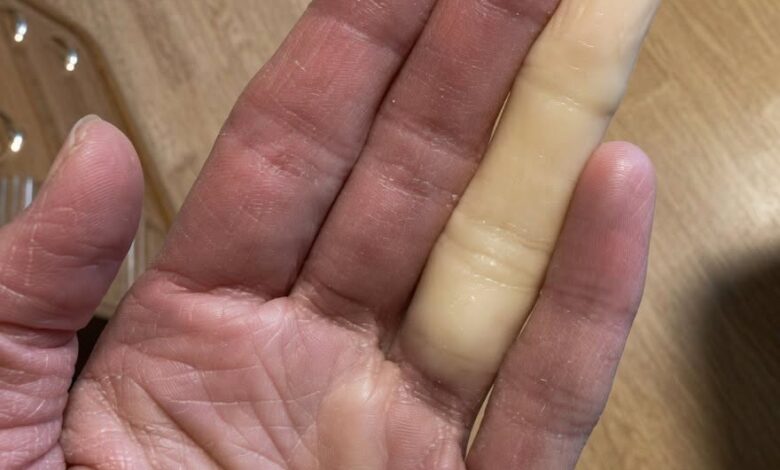
Waking in the night with one finger pale, cold, numb, or tingling can be unsettling. The color may fade to white, shift toward blue, and then become red or throbbing as warmth returns. In many cases this reflects a temporary narrowing of small blood vessels. Cold air, strong emotion, pressure on the hand, or an awkward sleeping position can all influence circulation and nerve sensation.
One familiar pattern is often called a Raynaud type response. The vessels supplying the fingers overreact to cold or stress and briefly restrict blood flow. Episodes can affect one or several fingers and may end after the hands are warmed. The appearance is dramatic, but many people experience a mild form without tissue damage. A clinician is the right person to determine whether the pattern fits that explanation.
Sleep position provides another possibility. Lying on an arm, bending the wrist sharply, or pressing the hand beneath a pillow can irritate a nerve and produce pins and needles. In that situation, changing position and gently moving the fingers often restores normal feeling. Repeated nighttime numbness, especially in the thumb and nearby fingers, may need evaluation for nerve compression rather than being dismissed as poor circulation.
When an episode begins, move to a warmer room and remove any tight ring or wrist item. Warm the hand gradually with body heat or comfortably warm water, not scalding water or direct intense heat. Open and close the hand gently, roll the shoulders, and allow normal color to return. Vigorous rubbing can hurt numb skin, and sudden high heat may cause a burn before sensation fully recovers.
Prevention starts with noticing triggers. Keep the bedroom comfortably warm, wear gloves when handling frozen items, and warm the whole body rather than only the fingertips. Nicotine constricts blood vessels and can worsen episodes. Some cold medicines and other drugs may also affect circulation, so recurring symptoms should be discussed with a clinician or pharmacist instead of stopping a prescription without advice.
Most brief episodes resolve without lasting harm, but certain signs deserve prompt attention. Seek urgent care if a finger remains white or blue, becomes severely painful, develops a wound, turns black, or feels cold while the rest of the hand is warm. Sudden weakness, facial drooping, speech difficulty, chest pain, or shortness of breath should be treated as an emergency rather than a simple cold-finger problem.
An appointment is sensible when attacks begin for the first time in adulthood, occur mainly on one side, become more frequent, or accompany joint pain, rash, swelling, unusual fatigue, or skin tightening. A clinician may review circulation, nerves, medications, work exposures, and other health conditions. Photographs taken during a color change and notes about temperature, duration, and affected fingers can make the pattern easier to assess.
A pale numb finger at midnight is a symptom, not a diagnosis. Gentle warming and removing pressure are reasonable first steps when the episode is brief and clearly linked to cold or posture. Repetition or warning signs change the situation. Paying attention to the pattern allows an ordinary temporary response to be managed calmly while ensuring that persistent circulation or nerve problems are not overlooked.
Because cold sensitivity differs widely, comparison with another persons hands is not very useful. Focus instead on what is normal for you. Track whether the thumb is spared, whether both hands react, and how long recovery takes. Consistent details help separate a harmless recurring response from a new change that deserves professional investigation.
A basic habit can make nighttime episodes less disruptive: place warm socks or light gloves nearby, avoid sleeping with the wrist folded under the head, and check that bedding is not trapping the arm. These adjustments do not treat disease, but they reduce common triggers and make it easier to observe whether the problem continues.