Nine Chair Positions That Reveal Your Hidden Personality
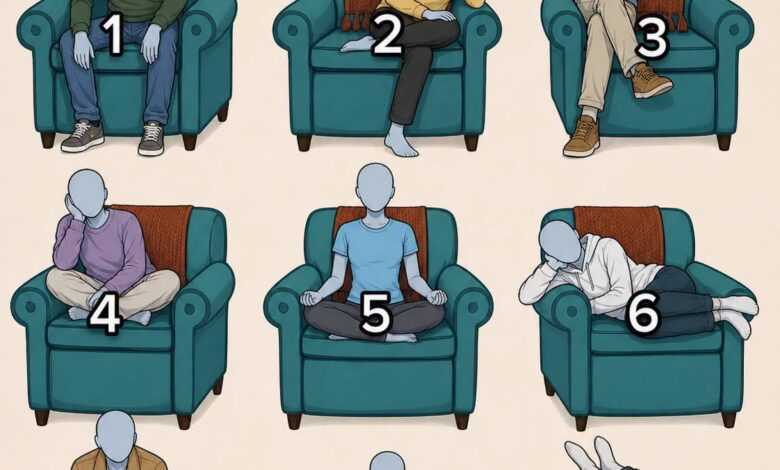
The position you choose when you sit down can look like an accidental habit, but it often reflects what your body is seeking in that moment. Comfort, protection, readiness, and confidence all influence posture. A popular seating chart turns those habits into nine personality types, inviting people to identify the pose they use most often. The exercise is playful rather than scientific, yet each position offers a recognizable story about mood and self-presentation.
The person who sits neatly at the edge of a chair, feet controlled and posture careful, may appear perfectly composed. This style suggests someone attentive to expectations and eager to avoid taking up more space than necessary. Such a person can be organized, considerate, and dependable. Beneath that polished surface, however, there may be worry about making mistakes or disappointing others. Their discipline brings stability, but relaxation can require conscious effort.
A sitter who leans forward with a hand supporting the chin resembles a quiet observer. This position keeps the body engaged while the mind studies the room. It fits the deep thinker who notices small changes, listens before speaking, and may continue analyzing a conversation long after it ends. Thoughtfulness is a strength, although constant analysis can become a trap when every possibility demands attention.
Someone draped confidently over an armrest sends a different message. The pose ignores the chair’s intended boundaries and claims space with ease. It can suggest independence, humor, and a dislike of rigid rules. At the same time, exaggerated confidence sometimes protects a private fear of losing control. The relaxed appearance may be genuine, or it may be the sitter’s way of deciding how others will perceive them before anyone gets too close.
The curled-up sitter creates comfort by folding inward. Knees drawn close and shoulders softened form a small shelter inside a busy environment. This position suits the daydreamer who values warmth, imagination, and emotional safety. Such people can be deeply affectionate with those they trust, yet they may retreat when a room becomes overwhelming. Their boundary is not rejection; it is a way to regain calm.
Cross-legged sitters are often associated with openness and flexibility. They occupy the center of the seat without appearing rigid, suggesting a person who values freedom and balance. This relaxed posture can belong to someone curious, social, and willing to change direction. The challenge may be maintaining structure when possibilities multiply. Freedom feels natural, while schedules and fixed expectations can feel unnecessarily confining.
The full-length lounger stretches into comfort as though the chair were a private retreat. This pose can signal ease, but it may also reveal a person using comfort to recover from stress they rarely discuss. Loungers often know how to enjoy the present and refuse unnecessary formality. Their apparent calm should not be mistaken for a lack of responsibility; sometimes it is the body finally claiming rest after carrying too much.
A forward-leaning sitter who seems ready to rise belongs to the strategist. Even during a break, the body remains prepared for the next task. This person anticipates problems, notices opportunities, and dislikes being caught unprepared. Their energy makes them effective in a crisis. Switching off is harder. A quiet evening can become another planning session because stillness feels less comfortable than action.
The most unconventional positions, including sitting backward, sideways, or nearly upside down, are linked with the rebel and chaotic creative. These sitters test the limits of what a chair is supposed to be. Their instinct is to reimagine ordinary objects and question rules that others follow automatically. They can energize a group with original ideas, though routines may feel restrictive and unfinished projects can accumulate behind the next exciting possibility.
No posture can diagnose a personality. People shift positions because of furniture, pain, clothing, fatigue, or simple habit. The value of the exercise lies in reflection rather than certainty. Choosing a number creates a reason to notice what the body does when nobody is directing it. Whether you are a careful perfectionist, hidden worrier, cozy dreamer, restless strategist, or cheerful rebel, the chair offers a small snapshot of the needs you carry into the room.