From Shy Bullied Kid to Action Legend: His Unbelievable Transformation
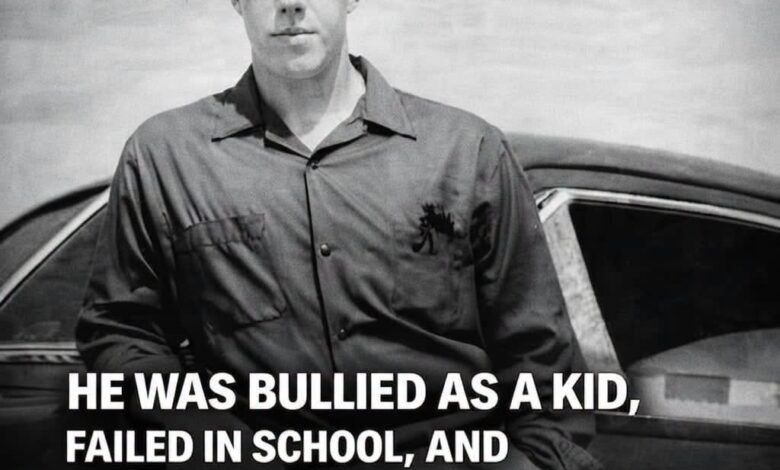
Long before audiences saw Chuck Norris as an unshakable action hero, he was a quiet boy who often felt invisible. His childhood in Oklahoma was shaped by a broken home, financial strain, and a deep lack of confidence. At school, he was not the student or athlete everyone expected to succeed. He struggled academically, was bullied, and learned to keep his ambitions small. The powerful screen presence that later became famous seemed impossible in those early years, when fear and uncertainty were stronger than any dream of Hollywood.
Joining the United States Air Force gave him a way out, although it did not instantly turn him into the man he wanted to become. His assignment took him to South Korea, far from everything familiar. There, he encountered Tang Soo Do and began training in martial arts. The discipline was demanding and often painful. Every movement exposed his weaknesses, but it also gave him a clear path forward. Progress came through repetition: another stance, another strike, another correction, and another day of refusing to quit.
Martial arts gradually changed more than his body. Training demanded patience when he felt frustrated and focus when doubt returned. The boy who had spent years avoiding attention learned to stand his ground. Losses in tournaments were especially important. Instead of proving that he did not belong, they showed him exactly what needed improvement. He went back to practice, refined his technique, and returned stronger. Confidence was no longer something he had to pretend to possess; it became the result of work he could measure.
When Norris returned to the United States, he continued training and teaching. His reputation grew through competition, but his influence also came from the way he helped students build discipline. The lessons he had discovered in Korea could be passed along: strength was not simply force, and courage was not the absence of fear. It was the decision to continue while fear was present. Those ideas shaped his martial arts career and prepared him for an unexpected opportunity in entertainment.
His path into film did not resemble an overnight discovery. Acting required a different kind of practice, and early roles demanded that he learn how movement, timing, and personality translated to the camera. His famous confrontation with Bruce Lee brought international attention. The sequence worked because both performers understood that a fight on screen must tell a story. Norris brought the discipline of a competitor while allowing himself to be part of a carefully constructed dramatic moment.
More roles followed, and his image developed into the determined hero audiences recognized immediately. He became associated with characters who faced overwhelming odds without surrender. The popularity of Walker, Texas Ranger carried that image into homes for years. Beneath the television certainty was the experience of someone who knew insecurity firsthand. His characters appeared fearless, but the man playing them had built his confidence slowly, through bruises, setbacks, instruction, and repetition.
The contrast between his childhood and public image helped turn Norris into a cultural symbol. Jokes exaggerated his toughness until he seemed less like an actor than an unstoppable force of nature. He accepted the humor, but the real story behind the legend was more useful than the mythology. He had not been born invincible. He had once been the shy child who expected to fail. What changed him was not a single victory but a long series of choices to return after disappointment.
His transformation also explains why his story continues to resonate beyond martial arts fans. Many people recognize the feeling of being underestimated or trapped by an early version of themselves. Norris demonstrated that identity can be rebuilt through habits. The bullied student became a competitor; the uncertain young airman became a teacher; the teacher became an actor; and the actor became one of the most recognizable action figures in the world.
That journey does not erase the difficulty of his beginnings. Instead, it gives those years meaning. Poverty, family instability, and school struggles could have narrowed his life permanently. Discipline opened it. Every stage depended on lessons learned in the previous one, from surviving a lonely childhood to training abroad and accepting unfamiliar professional risks. The toughest part of his legacy is therefore not any fictional battle. It is the persistence of a frightened young man who kept working until fear no longer controlled the direction of his life.