Son who donated part of his liver to his father unfortunately ends up fa
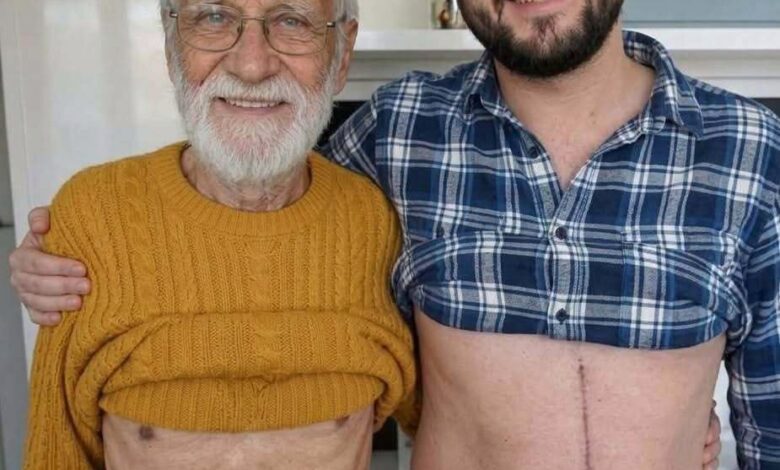
A 24-year-old electrical engineer named Kamran reportedly died after donating part of his liver to save his father, Mujahid Leghari. The transplant took place after Mujahid, from the Jatoi area of Muzaffargarh in Pakistan, developed serious liver disease and doctors advised that he needed a transplant.
Kamran volunteered as a living donor despite being warned that major surgery carries potentially life-threatening complications. A portion of his liver was removed and transplanted into his father. The operation saved Mujahid’s life, but Kamran failed to recover and died following the procedure.
Reports published in January 2018 said Kamran was buried while his father remained under treatment at Sheikh Zayed Hospital in Lahore. At that stage, the family had not told Mujahid that the son whose donation kept him alive had died.
The circumstances created a devastating contradiction. The father’s recovery represented the medical goal of the transplant, yet it came with a loss no parent could willingly accept. Relatives were forced to manage grief while protecting a critically ill patient from news they feared could affect his condition.
Living-donor liver transplantation is possible because the liver can regenerate. Surgeons remove a carefully calculated portion from a healthy donor and implant it into the recipient. Over time, both the remaining liver and transplanted portion can grow enough to perform necessary functions.
The procedure has saved many lives and allows a transplant to happen without waiting for a deceased donor organ. It is still major surgery for a healthy person. Potential complications include bleeding, infection, bile leakage, blood clots, organ injury, and, in rare cases, death.
Donor evaluation is therefore extensive. Transplant teams assess physical health, liver anatomy, blood compatibility, psychological readiness, family pressure, and the donor’s understanding of risk. A donor must be able to choose freely, without coercion or financial pressure.
Kamran’s decision was described as voluntary and rooted in a desire to save his father. The tragedy does not mean living donation is generally unsafe or should be rejected. It shows why informed consent must include even the outcomes everyone hopes will never occur.
Hospitals also need plans for donor follow-up. The recipient naturally receives intense attention because of severe illness and the risk of rejection, but the donor has undergone a complex operation and requires close monitoring for pain, infection, liver function, and unexpected deterioration.
For families, the emotional burden begins before surgery. Two loved ones enter operating rooms, and the success of one procedure depends on the other. When both recover, the experience can deepen an extraordinary bond. When a donor suffers a catastrophic complication, gratitude and guilt can become inseparable.
Mujahid’s situation was especially painful because he survived through part of his son’s liver while reportedly remaining unaware of the death. Medical teams and relatives would have had to decide when and how to tell him, considering both his right to know and his immediate medical stability.
The source title ends abruptly with “fa,” reflecting the truncated language common in viral posts. The reported outcome was not merely that the son “ended up failing” or becoming ill; Kamran died after the donation. That fact deserves direct, respectful wording rather than suspense.
His story is one of sacrifice and medical risk, not a warning against transplantation. Thousands of living donors recover and return to ordinary life, while recipients receive years they might otherwise lose. Kamran’s death represents the rare outcome that makes donor protection and honest counseling essential.
Behind the medical details was a young man who accepted danger for his father. The transplant achieved what he wanted—it kept Mujahid alive—but demanded a cost the family could never have imagined. Kamran should be remembered as a son whose act of love was complete, deliberate, and tragically final.