Breaking Silence: The Alarming Health Rumor That Nearly Paralyzed the Nation’s Political Landscape
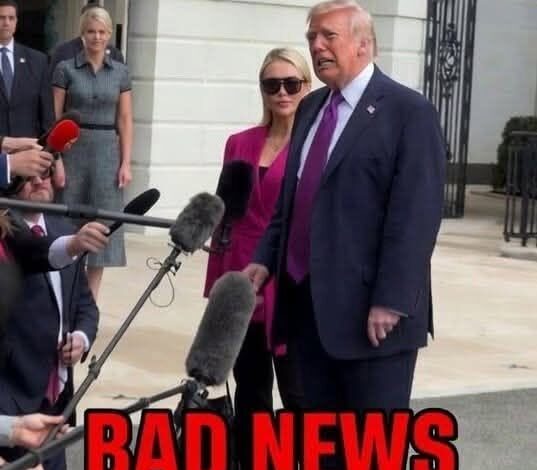
A sudden rumor claiming that Donald Trump had collapsed and been rushed to Walter Reed spread rapidly across social media, turning an ordinary gap in his public schedule into supposed evidence of a medical emergency. Posts described a secret hospital admission and suggested that the country was facing a political crisis, even though the accounts circulating the story offered no verifiable source.
The claim grew because the absence of information was treated as proof. When people could not find a minute-by-minute explanation of Trump’s movements, anonymous accounts filled the space with confident assertions. One account copied another, screenshots moved between platforms, and repetition made the story appear more established than it was.
Supporters reacted with fear and anger. Critics began discussing political consequences. Many users shared the posts because they believed speed mattered more than confirmation. Within a short period, a rumor built from a schedule change had been transformed into a national health scare.
The emotional language helped it travel. Terms such as “breaking,” “emergency,” and “hospitalized” encourage an immediate physical response. A frightened or excited reader is more likely to repost before checking the source. Social platforms then reward that engagement by showing the content to more people, creating the false impression that a widely viewed claim must be credible.
According to the account, official representatives later denied that Trump had been admitted to a hospital or experienced the reported medical crisis. The dramatic narrative collapsed once a direct response arrived, but the correction did not travel as cleanly as the original claim. Many people had already seen only the alarming headline, and copies continued circulating after the denial.
This is a recurring problem with claims about the health of public officials. Medical information is private unless the person or an authorized representative releases it, while changes to an itinerary can occur for countless routine reasons. That gap creates ideal conditions for speculation. A missing appearance can be turned into a diagnosis by people who have neither medical records nor direct access.
Responsible reporting requires more than a social-media account saying it has an unnamed source. A credible health report should identify where the information came from, explain what has been independently confirmed, and distinguish observation from inference. A motorcade near a hospital, a schedule adjustment, or an unverified screenshot does not by itself establish a medical emergency.
Readers can slow the cycle by checking whether major news organizations or official channels have confirmed the same event. The timing of a post also matters. Old photographs and videos are often reused during new rumors, and a genuine image may be given a false caption. Reverse-image searches, original timestamps, and complete video context can expose those manipulations.
The source’s tone is another warning sign. A post designed to provoke panic while withholding names, evidence, and precise dates is asking the audience to react rather than understand. Phrases such as “they do not want you to know” can make the lack of proof feel like part of a conspiracy, protecting the claim from ordinary scrutiny.
Artificial intelligence has made the problem harder. Fabricated audio, altered photographs, and realistic video can create apparent evidence for an event that never occurred. Even authentic-looking media should be traced to its earliest reliable source before it is shared as fact. Seeing a clip is no longer enough; provenance matters.
False health rumors affect more than one politician. They distract journalists and officials, move financial markets, intensify partisan conflict, and weaken trust in later information. If every schedule change produces a fictional emergency, the public may become slower to believe a genuine announcement when one eventually occurs.
No user can stop every rumor, but each person controls whether it moves through their own account. Waiting is not passive. It gives reporters time to verify, spokespeople time to respond, and misleading posts time to reveal their inconsistencies. Deleting a false share later cannot fully reach everyone who saw it first.
In this case, the supposed collapse and hospital admission were presented without proof and later denied in the narrative itself. The lesson is direct: a claim about a president’s health is not confirmed because it trends. Until reliable, attributable evidence appears, the honest description is unverified rumor, not breaking news.