Public Photos of Donald Trump Spark Online Health Questions, While Officials Point to Medical Report
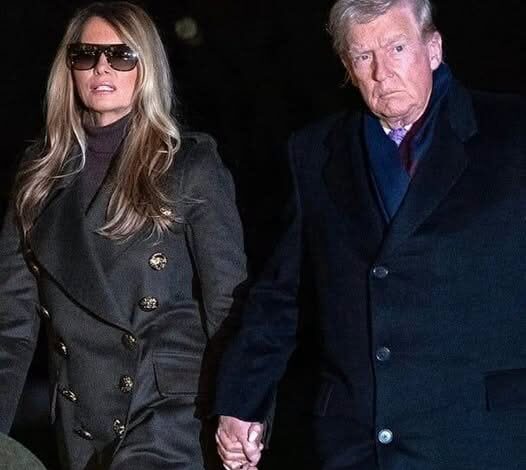
Recent public photographs of Donald Trump have triggered another wave of online discussion about his health. Social-media users focused on visible details in the images and offered competing interpretations, while officials and supporters pointed to previously released medical information as the appropriate basis for judging his condition.
Pictures of prominent political figures are examined more closely than ordinary photographs. Changes in lighting, camera angle, makeup, posture, or image compression can produce differences that appear significant when two photos are placed side by side. Once a speculative caption is attached, viewers may begin interpreting every visible mark as evidence of a larger problem.
That does not mean questions about a president’s health are irrelevant. The physical and cognitive demands of the office are substantial, and the public has a legitimate interest in credible information about a leader’s ability to perform official duties. The problem arises when medical conclusions are drawn from isolated photographs without an examination, full history, or supporting evidence.
Online commenters have pointed to apparent discoloration, swelling, or other changes visible in recent images. These observations have generated theories ranging from routine aging and minor injuries to more serious conditions. However, a photograph alone cannot establish a diagnosis. Even medical professionals generally avoid diagnosing a person they have not evaluated directly.
Officials responding to the discussion have cited medical reporting and statements from Trump’s healthcare team. Such documents typically include information about examinations, laboratory work, vital signs, medications, and general fitness. They offer more useful evidence than anonymous speculation, although the level of detail released about any president is also a matter of public debate.
The episode illustrates how quickly health rumors can grow around political leaders. Partisan divisions often shape the reaction. Critics may interpret uncertainty in the most alarming way, while supporters may dismiss every concern as politically motivated. Neither approach helps the public understand what is actually known.
Responsible coverage should distinguish observation from diagnosis. It is fair to report that people noticed a visible feature and raised questions. It is not responsible to turn those questions into a confirmed medical claim without documentation. Statements from physicians should be quoted accurately, dates should be included, and older photographs should not be presented as new.
Privacy remains relevant even for public figures, but presidents and major candidates traditionally release some medical information because their health can affect governance. The strongest approach is transparent, current reporting from qualified professionals rather than selective images or rumors.
The discussion surrounding Trump’s photographs is unlikely to disappear completely. Public figures are constantly recorded, and every image can become material for political argument. Readers should therefore examine the source, date, and context before accepting a dramatic interpretation.
For now, the available public record and official medical reporting provide the clearest basis for evaluation. Questions may be asked, but they should remain questions until supported by verifiable evidence. Political disagreement is inevitable; inventing certainty from a photograph is not a substitute for facts.