Inside the Northern Giant Hornet Scare—and Why Honeybees Were the Real Concern
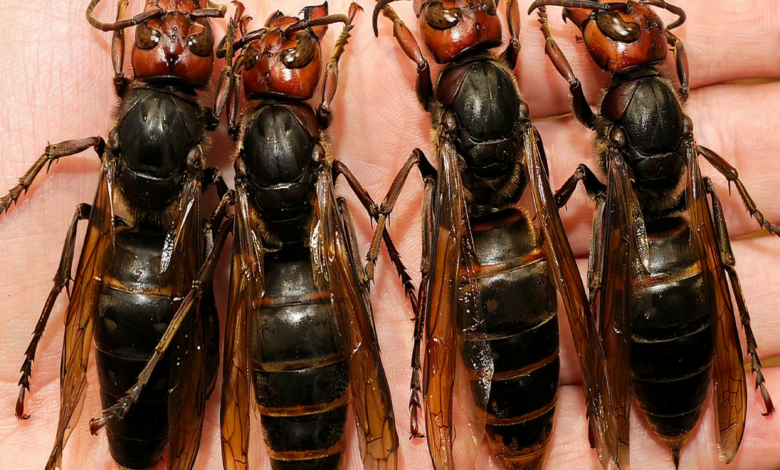
Few insects generated as much alarm as the northern giant hornet, the species sensationally labeled the “murder hornet” after it was detected in North America. The enormous hornet looked intimidating and could deliver a painful sting, but the greatest ecological concern was not that it hunted people. It was the damage a colony could inflict on honeybee hives.
Known scientifically as Vespa mandarinia, the northern giant hornet is native to parts of Asia and is considered the world’s largest hornet. Workers can approach five centimeters in length, with a broad orange head, dark eyes, and a yellow-and-black body. Confirmed detections near Washington State and British Columbia beginning in 2019 triggered an intensive effort to prevent the insect from establishing a permanent population.
The hornets specialize in attacking other social insects. During what researchers call the slaughter phase, a small group can enter a honeybee colony and kill large numbers of adult bees with powerful mandibles. They then take bee larvae and pupae back to feed their own young. European honeybees used widely in North American agriculture have limited defenses against this type of coordinated attack.
Some Asian honeybee species have evolved an extraordinary response. They surround an invading hornet in a dense ball and vibrate their flight muscles, raising heat and carbon-dioxide levels until the predator dies. Western honeybees generally cannot perform the same defense effectively. That difference made beekeepers and agricultural agencies especially concerned because honeybees pollinate fruit, vegetables, nuts, and wild plants.
Northern giant hornets can also be dangerous to people, particularly when a nest is disturbed. Their long stingers can penetrate some protective clothing, and multiple stings may cause severe tissue injury, allergic reactions, kidney complications, or other medical emergencies. A single sting is unlikely to kill a healthy person without an allergy, but anyone stung repeatedly or showing breathing difficulty, swelling, dizziness, or other systemic symptoms needs urgent medical care.
Agricultural teams responded to the North American detections with traps, public reporting systems, and radio tracking. Captured hornets were fitted with tiny transmitters and followed through wooded areas to underground or tree-cavity nests. Specialized crews worked in reinforced suits, often at night, using extraction equipment and other methods to remove nests before new queens could disperse.
Those efforts worked. Authorities eliminated confirmed nests and continued surveillance to ensure the invasive population had not become established. The episode demonstrated how quickly coordinated biosecurity action can contain a potentially damaging species.
The hornet scare also showed how dramatic nicknames can distort public understanding. The insect was genuinely capable of harming pollinators and could be medically dangerous, but headlines sometimes made it sound like an airborne predator actively searching for human victims. In reality, hornets generally defend nests or respond when threatened.
People who see an unusually large hornet should not approach, strike, or attempt to remove a suspected nest. A photograph taken from a safe distance and a report to the appropriate agricultural or invasive-species authority is more useful.
The northern giant hornet became famous because it looked frightening. Its real significance, however, was the threat an invasive colony could pose to honeybees, agriculture, and ecosystems—and the successful scientific campaign that stopped that threat from gaining a foothold.